Find It
Understand how the work actually gets done. Look for waiting, searching, re-entry, reconciliation, translation, workarounds, and manual bridges between systems.
Practical AI for operations & supply chain
I help operations and supply chain professionals use AI to improve real work, prove the value they create, and become more valuable to their organizations.

Start closer to the work
Most organizations are full of work that was rational when it was created but no longer has to be done the same way: searching, downloading, copying, reconciling, translating, re-entering, checking, and manually bridging gaps between systems.
I call it
Not stupid people. Stupid work.
The opportunity usually begins much closer to the work than to the boardroom.
What Stupid Stuff do you hate doing?
A practical operating framework
AI can help with the solution. The harder work is knowing what is worth solving—and what the improvement is actually worth.

Understand how the work actually gets done. Look for waiting, searching, re-entry, reconciliation, translation, workarounds, and manual bridges between systems.
Once the friction is clear, ask how AI can simplify, automate, or redesign the workflow—while keeping human judgment where it matters.
Translate the improvement into incremental cash flow, operating performance, risk, and value. Show what changed and what it is worth.
Featured concepts
The repetitive, low-value work people hate doing: searching, downloading, copying, reconciling, re-entering, and checking.
Explore →When systems do not connect, a person becomes the connector.
Explore →Spreadsheet sprawl is often not the problem; it is a map showing where formal systems fail to give people what they need.
Explore →People moving digital cargo—download, clean, copy, upload, email—using warehouse-like labor in an information environment.
Explore →A capable employee loses recurring time manually bridging disconnected systems because that was once the rational way to get the work done.
Explore →Pair AI with the subject-matter expert who already understands the work.
Concept by Ret. Col. Mark Vitantonio.Explore →Real examples
These ideas come from decades of operating experience and hundreds of graduate-student workplace projects—not invented AI use cases.
Billing was delayed 5–8 days because shipping-cost data came back slowly across multiple vendors and systems.
Consolidating vendors and imposing a next-business-day standard helped invoices go out at least four days faster.
A customer-service team reported spending nearly one-third of its time fixing invoice pricing.
The pain appeared downstream, but a major root cause was upstream contract and pricing setup.
A global logistics bidding process repeatedly translated customer RFP data into internal formats and back again.
Roughly 90% of wait time sat in conversion/re-conversion, and some multi-million-dollar opportunities timed out before submission.
A recurring inventory review can move from manual analysis to a repeatable Claude-enabled workflow.
Then build a financial business case that measures the value of the improvement.
Watch
Practical examples of how AI can improve real operational work—where to find the opportunity, redesign the workflow, and prove what the improvement is worth.
 ▶
Learn to recognize the patterns hiding inside everyday operational friction.
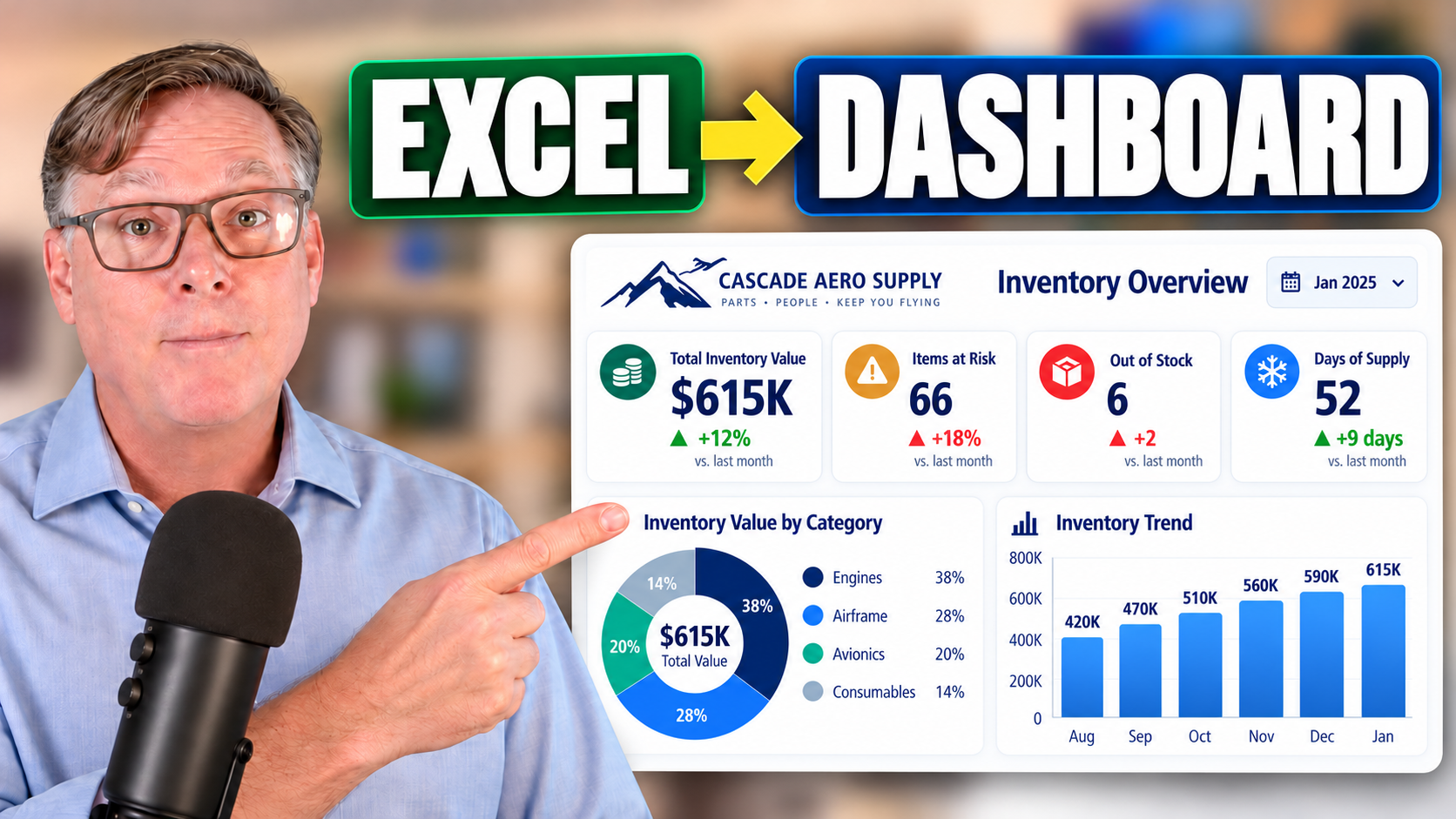 ▶
From spreadsheet exports to decision-ready inventory intelligence.
 ▶
Turn a better workflow into a financial argument leaders can act on.
Why listen to Dan?
I’ve built, bought, sold, merged, turned around, and restructured companies with a focus on cash flow and operating performance. Today I teach what I learned—and I build the AI systems I use in the work.
See how we can work together →Ways to work with me
For operations and supply-chain professionals who want help identifying high-value AI opportunities, redesigning workflows, building a credible business case, or translating their work into greater career value.
Practical learning focused on identifying friction, building AI-enabled workflows, and proving measurable value.
Details coming soonA practitioner community for people learning how to apply AI where work actually gets done.
Details coming soonFree resources
Get practical examples, prompts, frameworks, and tools for finding work AI can improve—and proving what the improvement is worth.
The point
Find the friction in your work. Use AI to improve it. Then prove what the improvement is worth.